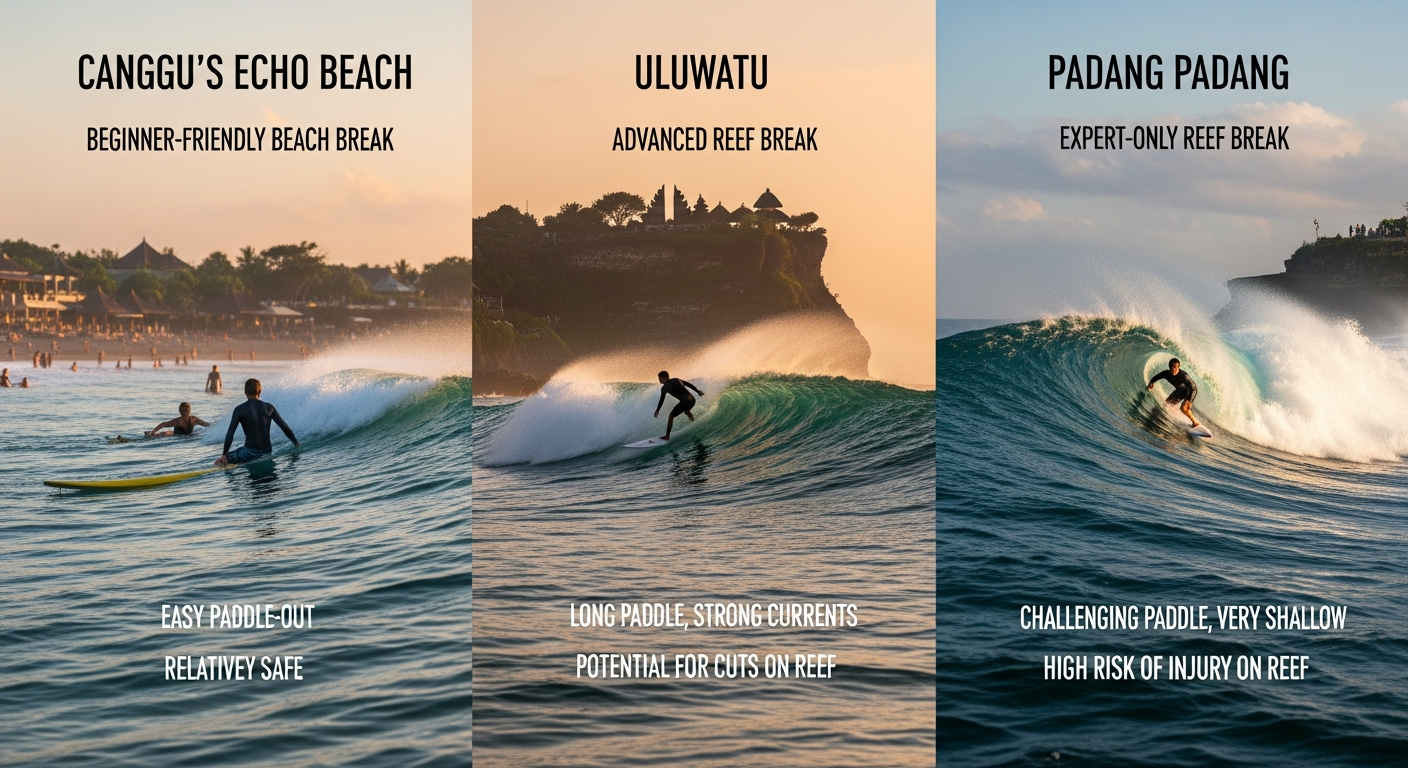
Surfing Canggu Comparison & Alternatives
- **Diverse Breaks:** Gentle sand-bottom waves at Berawa contrast with reef breaks like Old Man’s.
- **Professional Instruction:** ISA-certified instructors are widely available for lessons and coaching.
- **Vibrant Community:** A lively surf culture supports board rentals, cafes, and family-friendly activities.
The Indian Ocean swells arrive, shaping the volcanic sands and coral reefs of Bali’s southwest coast. Canggu presents itself, not as a singular wave, but as a diverse coastline where the rhythm of the ocean meets a dynamic surf community.
Canggu’s Distinct Surf Identity
Canggu’s coastline, stretching from Berawa to Pererenan, offers a unique surf identity. It is a place where the morning ritual involves checking the swell at Echo Beach, then choosing between a gentle paddle at Berawa or a more challenging ride at Batu Bolong. This geographical spread, approximately 8 kilometers of continuous coastline, provides a spectrum of conditions. Beginners often find their rhythm on the softer, sand-bottom waves of Berawa, where the average wave height hovers between 2-4 feet on a moderate swell. Surf schools, many employing ISA (International Surfing Association) certified instructors, provide lessons starting from around IDR 400,000 for a group session, including board rental. This accessibility defines much of the Canggu experience.
For those moving beyond the white water, Old Man’s reef break offers a longer, more consistent ride, particularly at mid-tide. Here, the waves average 3-6 feet, demanding a bit more paddle power and awareness. The vibrant atmosphere around Old Man’s, with its namesake beach bar established in 2012, adds to the surf culture, creating a social hub for post-surf discussions. Canggu does not force a singular surf narrative; instead, it invites surfers to discover their preferred break and community. This flexibility, combined with the availability of quality board rentals—a soft-top for IDR 50,000 per hour or a fiberglass shortboard for IDR 100,000 per day—positions Canggu as a versatile surf destination. The area has seen a significant increase in surf-related tourism since 2010, cementing its status.
Canggu vs. Kuta & Seminyak: The Beginner’s Arena Reimagined
When considering Bali for learning to surf, Kuta Beach often surfaces as the traditional starting point. Its long, sandy bottom and consistent white water make it an undeniable nursery for absolute beginners. However, Canggu, particularly Berawa Beach, presents a compelling alternative, reimagining the beginner’s arena. Kuta’s main beach stretches over 2.5 kilometers and has been a surf mecca since the 1970s, drawing large crowds. The sheer volume of surf schools and vendors can feel overwhelming, with an estimated 50+ surf schools operating along its sands. While lessons are often slightly cheaper, sometimes starting from IDR 350,000, the instructor-to-student ratio might be higher.
Canggu offers a more refined, less frenetic introduction to surfing. Berawa Beach provides similar gentle, sandy waves ideal for learning, but with a generally more relaxed environment. The density of surf schools is lower, fostering a more personalized experience. Many Canggu surf schools, such as those found near Echo Beach, emphasize small group sizes—often 1:3 or 1:4 instructor-to-student ratios—ensuring focused attention. Seminyak, located between Kuta and Canggu, shares Kuta’s beach break characteristics but caters more to luxury resorts than dedicated surf culture. The waves here are often similar to Kuta, but the focus shifts from surf-centric activity to high-end dining and shopping. Canggu maintains a surf-first ethos, even for beginners, providing a smoother transition from foam to green waves without the intense commercialism of Kuta. The average distance from Canggu to Kuta is approximately 15 kilometers, a drive that can take 45-90 minutes depending on traffic.
Canggu vs. Uluwatu & The Bukit: Reef Breaks and Expertise
The Bukit Peninsula, home to legendary breaks like Uluwatu, Padang Padang, and Impossibles, represents the pinnacle of Bali’s reef surfing. These waves are powerful, consistent, and generally reserved for experienced surfers. Uluwatu, famous for its five distinct sections and a wave that can break over 200 meters long, has hosted numerous WSL (World Surf League) events, attracting professional surfers globally. The reef here is sharp, and the currents strong, demanding advanced skill and local knowledge. This contrast sharply with Canggu’s offerings.
While Canggu also features reef breaks like Old Man’s and Batu Bolong, they are considerably more forgiving than their Bukit counterparts. Old Man’s provides a long, rolling wave that is accessible to intermediate surfers, particularly longboarders, on smaller to medium swells (3-5 feet). Batu Bolong, with its distinctive rock formation, offers a slow, fat wave perfect for practicing turns and noseriding. The reef at these Canggu spots is generally flatter and less aggressive, making wipeouts less punishing. Professional coaching in Canggu often focuses on refining technique for these intermediate reef breaks, preparing surfers for more challenging conditions. Surf camps in Canggu frequently offer guided trips to the Bukit for advanced surfers, but they always return to Canggu for daily practice and lessons, recognizing its balanced appeal. The drive from Canggu to Uluwatu typically takes 1.5 to 2 hours, covering about 35 kilometers. This journey highlights the distinct difference in wave character and target skill level between the two regions. For more details on Bali’s diverse surf spots, a visit to Wikipedia’s entry on Surfing in Indonesia provides broader context.
Canggu vs. Medewi & Nusa Lembongan: The Road Less Surfed
Beyond the immediate buzz of South Bali, destinations like Medewi and Nusa Lembongan offer different surf experiences, catering to specific preferences. Medewi, located approximately 70 kilometers west of Canggu, is renowned for its incredibly long, peeling left-hand point break. This wave is a longboarder’s dream, offering rides that can extend for hundreds of meters on good days. The pace of life in Medewi is significantly slower, with fewer crowds and a more rustic, traditional Balinese village atmosphere. It’s a destination for dedicated surfers seeking a singular wave experience, often requiring a 2-hour drive from Canggu. While Medewi offers unparalleled length, its specific wave type means less variety for surfers looking to practice different maneuvers or switch between shortboarding and longboarding.
Nusa Lembongan, a smaller island southeast of Bali, provides a true island escape. Accessible by a 30-minute fast boat ride from Sanur (which itself is about 45 minutes from Canggu), Lembongan boasts three main breaks: Playgrounds, Lacerations, and Shipwrecks. Playgrounds is a softer, user-friendly reef break suitable for intermediates, while Lacerations and Shipwrecks are faster, more critical waves for experienced surfers. The charm of Lembongan lies in its tranquil environment and clear turquoise waters, distinct from Bali’s mainland. However, the logistics of getting there, including boat transfers and accommodation, add layers of planning. Canggu, conversely, offers immediate access to multiple breaks within a 10-minute scooter ride, along with a comprehensive surf infrastructure—from board repair shops to specialized surf photography services. The choice between Canggu and these alternatives hinges on a surfer’s priority: convenience and variety versus a specific, more remote experience.
The Canggu Advantage: Lessons, Longboards, and Lifestyle
Canggu’s appeal extends beyond its diverse wave portfolio; it’s the comprehensive ecosystem built around surfing that truly sets it apart. For families, the presence of numerous certified ISA instructors who specialize in teaching children, often from ages 6 and up, provides peace of mind. These instructors prioritize safety, teaching ocean awareness alongside fundamental surfing skills. Many surf schools offer family packages, ensuring a tailored experience for all age groups. Longboarders find Canggu particularly accommodating. Waves at Batu Bolong and Old Man’s offer ideal conditions for longer boards, allowing for graceful cross-stepping and noseriding. The local surf shops maintain a wide inventory of longboards for rent and purchase, catering specifically to this style, a dedication less prominent in other areas focused solely on high-performance shortboarding.
Women surfers also find a welcoming and empowering environment in Canggu. Several surf schools and camps specifically cater to women, offering female-only coaching sessions and retreats that foster camaraderie and confidence in the water. This focus on inclusivity, combined with a vibrant post-surf lifestyle—cafes, yoga studios, and healthy eateries within minutes of the beach—creates a holistic experience. Canggu hosts local surf competitions, like the annual Deus 9ft & Single Log Fest at Echo Beach, drawing international longboard talent and showcasing the community’s passion. This event, typically held in June, celebrates traditional longboarding. The blend of professional instruction, specific gear availability, and a supportive community makes surfing Canggu an unparalleled choice for many. For more insights into Indonesian travel experiences, consult Indonesia.travel’s Canggu guide.
Navigating Canggu’s Waves: Practicalities and Progression
Understanding the nuances of Canggu’s breaks allows for optimal surf progression. Echo Beach, for instance, offers both left and right-hand reef breaks that function best at mid to high tide, often producing hollower waves suitable for more advanced intermediate surfers. The average wave length at Echo Beach can be up to 100 meters on a good swell. For those seeking consistency and a slightly less crowded peak, Pererenan Beach, just north of Echo, provides similar reef breaks with often fewer surfers. The tide charts become a daily guide here, influencing not just wave quality but also reef exposure. Knowing when to surf each spot is part of the local knowledge gained through lessons or observation.
For beginners, the priority remains Berawa. The soft, sandy bottom eliminates the concern of reef cuts, making it a safer environment for initial attempts. Surf lessons often begin with theory on the sand for 15-20 minutes, followed by 90 minutes in the water. Progression is tangible in Canggu; a beginner starting at Berawa can realistically aim to paddle out to Old Man’s or Batu Bolong within a week of consistent lessons, provided they demonstrate good water confidence and basic technique. The availability of diverse board types, from foamies (8-9 feet) to performance shortboards (5-7 feet), at rental shops across Canggu, supports this progression. Many shops offer weekly rental rates, which can reduce daily costs by 20-30%. This structured path to improvement, coupled with the relaxed yet vibrant atmosphere, solidifies Canggu’s reputation as a prime location for surf development.
Canggu offers a compelling balance for surfers of all levels, combining accessible waves with professional instruction and a vibrant community. Whether you are catching your first wave at Berawa, refining turns at Old Man’s, or capturing the perfect longboard ride at Batu Bolong, surfing Canggu provides a dynamic and enriching experience. Explore our range of lessons, board rentals, and guided surf trips to discover your perfect wave. Your next surfing adventure begins at surfingcanggu.com.