The Definitive Surfing Canggu Guide
- Waves range from gentle sand-bottom rollers ideal for beginners to powerful reef breaks for experienced surfers.
- Lessons are widely available, with ISA (International Surfing Association) certified coaches ensuring safety and effective progression.
- Board rentals, from soft tops to performance shortboards, are accessible at all major surf camps and beachside vendors.
The Indian Ocean breathes a steady rhythm onto Canggu’s volcanic sands. Each sunrise here paints a new canvas for the day’s first swell, inviting surfers to engage with Bali’s vibrant coastline.
The Rhythms of Surfing Canggu: An Overview of Bali’s Premier Surf Destination
Canggu, situated on Bali’s southwest coast, establishes itself as a focal point for the island’s surf culture. Its coastline stretches for approximately eight kilometers, offering a variety of wave types influenced by the consistent southwesterly swells from the Indian Ocean. Water temperatures remain consistently warm, averaging between 27 and 29 degrees Celsius year-round, making wetsuits generally unnecessary for most surfers.
The dry season, from April to October, typically presents the most favorable conditions for surfing Canggu, with cleaner groundswells and offshore winds. During this period, wave faces can reach heights of 1.5 to 3 meters on more exposed breaks. The wet season, from November to March, still offers surfable waves, often with smaller, more manageable conditions suitable for beginners and longboarders, particularly at spots like Berawa and Batu Bolong. Bali’s surf scene gained international recognition in the 1970s, evolving from a destination for adventurous travelers to a globally recognized surf hub. The area experiences an average of 300 days of surfable waves annually. Access to the breaks is straightforward, with local roads leading directly to beach parking areas, often managed by local communities. The consistent nature of the swells ensures that whether you seek gentle rollers or more challenging barrels, a suitable wave is typically available somewhere along the Canggu coast.
The geology of the coastline, characterized by black volcanic sand beaches and scattered reef formations, creates distinct breaks. These conditions allow for a natural progression, where a surfer might begin on the softer waves of Batu Bolong and advance to the more demanding reef breaks of Echo Beach. The proximity of these surf spots, often within a 10-kilometer radius, simplifies the logistics of chasing the best conditions each day. This accessibility, combined with the consistent tropical climate, solidifies Canggu’s reputation as a prime destination for surfing experiences across all skill levels.
Mastering the Waves: Surfing Canggu Lessons and Professional Coaching
For those new to the sport or seeking to refine their technique, professional surfing Canggu lessons provide a structured and safe entry point. The majority of surf schools and independent instructors operating in Canggu hold certifications from the ISA (International Surfing Association), ensuring adherence to global safety and coaching standards. ISA Level 1 certification is the minimum requirement for teaching beginners, focusing on water safety, basic paddling, and standing techniques. Many senior coaches possess ISA Level 2 accreditation, enabling them to guide intermediate and advanced surfers through more complex maneuvers like cutbacks and bottom turns.
Lessons typically last around two hours, including a beach theory session covering ocean awareness, wave etiquette, and safety protocols, followed by practical water time. Group lessons usually maintain a student-to-instructor ratio of 1:3 or 1:4, ensuring personalized attention within a social setting. Private lessons offer an exclusive 1:1 coaching experience, allowing for highly tailored instruction and faster progression, with prices generally ranging from IDR 400,000 to IDR 800,000 per session. Family packages are also available, often including dedicated instructors for children as young as six years old, focusing on gentle waves and fundamental skills. The average age of first-time surf students in Canggu is around 28 years, though participants span all age groups.
Dedicated programs for women surfers have also grown in popularity, fostering supportive environments with female instructors who understand specific learning preferences. These programs often incorporate yoga and wellness elements, attracting a diverse clientele. Professional coaching extends beyond basic lessons, offering video analysis sessions and advanced technique drills for experienced surfers aiming to compete or master specific wave types. This comprehensive approach to instruction ensures that every individual, from a complete beginner to a seasoned enthusiast, finds appropriate guidance to enhance their surfing journey in Canggu. For more on choosing the right instruction, visit our guide to surf coaching.
Navigating Canggu’s Breaks: From Echo Beach to Batu Bolong
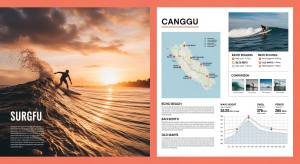
The coastline of Canggu presents a distinct series of surf breaks, each with its unique characteristics and appeal. Starting from the south, Berawa Beach offers a long, consistent sand-bottom wave, ideal for intermediate surfers and longboarders. The main peak at Berawa provides both left and right-hand rides, often reaching 1 to 2 meters. Moving north, a short 1.5-kilometer stretch leads to Batu Bolong. This break is arguably the most accessible for beginners, featuring a wide, slow-breaking wave over a relatively soft reef and sand bottom. It is particularly popular for surf lessons and longboarders due to its mellow nature and consistent 0.5 to 1.5-meter waves. The beach is approximately 500 meters long, providing ample space even on busy days.
Adjacent to Batu Bolong lies Old Man’s, named after the famous beachside bar. This reef break is slightly more challenging than Batu Bolong but remains suitable for intermediates, especially at mid-tide. Old Man’s produces long, peeling lefts and rights, often described as a fun, cruisy wave, with typical heights ranging from 1 to 2 meters. The reef here is generally flat, reducing impact risks compared to sharper, more exposed reefs. Further north, approximately 2 kilometers from Old Man’s, is Echo Beach. This break is known for its more powerful and faster waves, breaking over a mix of sand and reef. Echo Beach often offers multiple peaks, including both lefts and rights, and is favored by intermediate to advanced surfers. Waves here can reach 2.5 meters on a good swell, providing more challenging rides and occasional barrels.
Beyond Echo Beach, the breaks at Pererenan offer a slightly less crowded experience, often with a powerful left-hand wave over a reef. Pererenan is generally recommended for experienced surfers due to its stronger currents and more critical take-offs, with waves regularly hitting 2 meters. The distance between Berawa and Pererenan is roughly 5 kilometers, making it feasible to explore multiple spots within a single day. Each break maintains a distinct character, ensuring that surfers can find conditions matching their skill level and preference throughout the day. For detailed conditions, checking local surf reports is always advised.
Gear Up: Surfing Canggu Board Rental and Essentials
Accessing the right equipment is straightforward when surfing Canggu, with numerous options for board rental and surf essentials. Most surf camps, beachside warungs, and dedicated surf shops offer a wide selection of boards, catering to every skill level and preference. For beginners, soft-top boards are highly recommended due to their buoyancy and forgiving nature. These typically range from 7 to 9 feet in length and are available for rent at an average of IDR 50,000 to IDR 75,000 per hour, or IDR 150,000 to IDR 250,000 for a full day.
Intermediate and experienced surfers will find a variety of fiberglass and epoxy boards, including longboards (9-10 feet), funboards (6-8 feet), and performance shortboards (5-6.5 feet). Daily rental rates for these boards usually fall between IDR 100,000 and IDR 300,000, depending on the board type and condition. Many rental shops offer weekly or monthly packages at discounted rates, which can be a cost-effective option for extended stays. It is advisable to inspect the board for dings or damage before rental and clarify the return policy.
Beyond the board, several essential items enhance the surfing experience. A leash, connecting the board to your ankle, is mandatory for safety and preventing board loss. Surf wax, appropriate for tropical water temperatures (typically a base coat and warm water wax), ensures grip. Rash guards are highly recommended to prevent chafing and provide sun protection; UV index in Bali often exceeds 10. Reef booties offer protection against sharp coral and rocks, especially at breaks like Echo Beach and Old Man’s. Sunscreen, preferably zinc-based and waterproof, is crucial for protecting exposed skin during long sessions. Local surf shops, such as Drifter Surf Shop and Deus Ex Machina, offer a range of these accessories, alongside stylish apparel. For guidance on choosing a board, explore our guide to surfboards.
Beyond the Board: Lifestyle and Logistics for Surfing Canggu
Surfing Canggu extends beyond the waves, encompassing a vibrant lifestyle and practical considerations. The local culture is deeply rooted in Balinese Hindu traditions, characterized by daily offerings (canang sari) and respectful community interactions. Surfers benefit from understanding local etiquette, such as respecting spiritual sites and maintaining a polite demeanor in and out of the water. The average water temperature of 28°C minimizes the need for heavy wetsuits, typically only a rash guard for sun protection is sufficient.
Logistically, Canggu is accessible via Ngurah Rai International Airport (DPS), approximately 20 kilometers away, with a typical taxi ride costing around IDR 300,000. Transportation within Canggu is primarily via scooter rental, averaging IDR 70,000 to IDR 100,000 per day, or ride-hailing apps like Gojek and Grab. The best time to visit for optimal surfing conditions is during the dry season (April-October), though surfable waves are present year-round. An average daily budget for a surfer, including accommodation, food, and board rental, can range from IDR 500,000 to IDR 1,500,000, depending on preferences.
Safety in the water is paramount. Always surf with a leash, understand your limits, and be aware of currents. Local surf instructors often provide detailed safety briefings. Efforts towards sustainability are also gaining traction, with initiatives like beach clean-ups and responsible tourism practices encouraged. Many local businesses, including surf schools, participate in environmental programs aimed at preserving Bali’s coastal ecosystem. This holistic approach ensures that the experience of surfing Canggu is not only enjoyable but also respectful of its natural and cultural surroundings. Further information on Bali’s environmental efforts can be found on Indonesia.Travel.
Specialized Experiences: Longboarding, Women’s Surfing, and Photography
Canggu caters to specific surfing interests, offering specialized experiences for longboarders, women surfers, and photographers. Longboarding thrives on Canggu’s mellow, rolling waves, particularly at Batu Bolong and Old Man’s. These breaks provide ample opportunity for cross-stepping, nose-riding, and graceful maneuvers characteristic of longboarding. The consistent, slower-peeling waves are ideal for perfecting technique, and many local shapers and rental shops offer custom longboards, often ranging from 9 to 10.5 feet. Longboarding culture in Canggu is prominent, with regular informal gatherings and small competitions celebrating the classic style.
The rise of women’s surfing in Canggu is notable, with an increasing number of female-focused surf camps and coaching programs. These initiatives create supportive and empowering environments, often led by ISA-certified female instructors. Such programs frequently integrate wellness activities like yoga and mindful movement, appealing to women seeking a holistic surf experience. Over the past five years, female participation in surf lessons has seen an estimated 20% increase, reflecting a growing community. These groups often focus on building confidence, understanding wave dynamics, and fostering camaraderie among participants. Many women’s surf retreats operate for 5-7 days, combining intensive coaching with cultural excursions.
For surf photographers, Canggu offers dynamic backdrops and consistent action. The black sand beaches provide a striking contrast against the white water, and the diverse skill levels of surfers ensure a wide range of photographic opportunities, from beginner wipeouts to advanced aerials. Several professional surf photographers are based in Canggu, offering services ranging from individual photo shoots to full-day packages. These photographers often use high-end waterproof cameras and long lenses, capturing moments from the water or the beach. Popular spots for photography include the main peaks at Echo Beach and Batu Bolong, especially during sunrise and sunset when the light is most dramatic. Capturing the essence of surfing Canggu becomes an art form in itself, preserving memories of this vibrant surf destination.
To plan your ultimate surf adventure and discover more about everything Canggu has to offer, explore the comprehensive resources available on surfingcanggu.com. Whether you’re seeking your first wave or aiming to master a new break, your journey begins here.